Introduction
Traveling with a suitcase involves more than choosing what to pack. Travelers also need to think about how their luggage will be handled, stored, transported, and identified throughout a journey. Whether someone is preparing for a weekend getaway, a business trip, or a longer international holiday, small accessories can help make luggage management more convenient.
A luggage strap is one example of a simple travel accessory designed to wrap around a suitcase and provide an additional external fastening point. Depending on its construction and intended use, a strap may help keep a packed suitcase more secure if its primary closure becomes strained, make a bag easier to recognize, or provide an extra layer of organization when handling luggage.
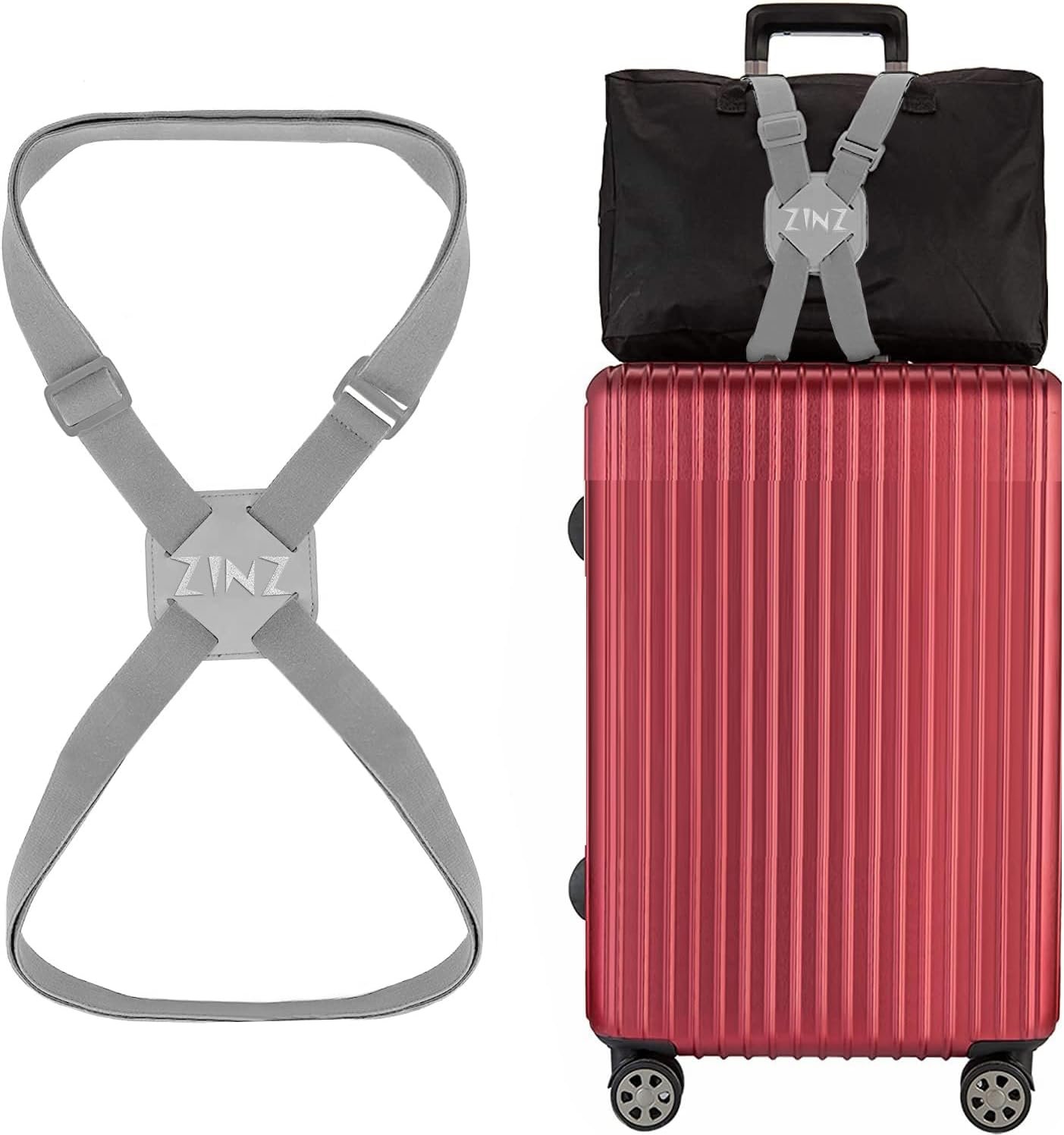
The ZINZ High-Elastic Luggage Strap Adjustable Suitcase Belt in Gray is listed as an adjustable luggage accessory intended for use with suitcases and other compatible travel applications. Its product description highlights an elastic design, an adjustable format, and a gray finish. These characteristics make it relevant to travelers who want a flexible external strap rather than a fixed-length belt.
Although a luggage strap is a relatively straightforward product, choosing one involves several practical considerations. Travelers should think about suitcase dimensions, the amount of elasticity, buckle construction, adjustment range, and how the strap fits around different types of luggage. It is also important to understand the limits of an external strap: it may provide supplementary support, but it does not replace a functioning suitcase closure or guarantee protection against damage or unauthorized access.
This guide explains how an adjustable elastic suitcase belt can be used, what to consider before choosing the ZINZ gray luggage strap, and how it compares with other common luggage-securing accessories. The aim is to help travelers determine whether this type of strap fits their luggage, travel habits, and organizational needs.
Understanding an Adjustable Elastic Luggage Strap
A luggage strap is an external belt designed to wrap around a suitcase or another compatible bag. It typically consists of a length of webbing or elastic material, an adjustment mechanism, and a fastening component such as a buckle.
The precise construction varies by model. Some straps are made primarily from non-stretch webbing, while others incorporate elastic material that allows them to stretch under tension. Adjustable designs can be shortened or lengthened to accommodate different suitcase dimensions within the manufacturer’s specified range.
The ZINZ strap is described as high-elastic and adjustable, with a gray color. Those features suggest a design intended to combine flexibility with adaptable sizing. However, the exact adjustment range, material composition, buckle design, and supported luggage dimensions should be verified using the current Amazon listing and manufacturer information.
A luggage strap is generally used around the exterior of a bag rather than as a replacement for its original zipper, latches, or locking mechanism. Depending on the way it is fitted, it may help hold the suitcase together if its main closure is under pressure. It can also create a visible band around the luggage, making the bag easier to distinguish from similar suitcases.
The usefulness of an elastic luggage strap depends on how it fits the suitcase and how it is used. A strap that is too loose may slide out of position, while one that is excessively stretched may place unnecessary tension on the material or buckle.
For that reason, travelers should evaluate the product’s specifications and intended use instead of assuming that every adjustable strap will fit every suitcase.
Key Features of the ZINZ Gray Luggage Strap
1. Elastic Construction for Flexible Fitting
The product description identifies the strap as high-elastic. Elasticity allows a material to stretch and return toward its original shape within its designed operating limits.
For luggage accessories, this can be useful because suitcases vary in shape, and packed bags may not always have perfectly uniform dimensions. A flexible strap may accommodate modest variations in circumference while maintaining contact with the exterior of the suitcase.
For example, a traveler might use an elastic strap around a suitcase packed close to its normal capacity. The strap can provide an additional external band around the luggage, provided the dimensions and tension remain within the product’s intended range.
Elasticity should not be confused with unlimited stretch or heavy-duty load-bearing capacity. Stretch materials can lose tension, become damaged, or fail if subjected to excessive force. Their performance may also change with age, repeated use, temperature, and exposure to environmental conditions.
A strap should therefore fit securely without being forced beyond its intended extension. If it feels excessively tight, the traveler should consider a different adjustment or a strap designed for the suitcase’s dimensions.
2. Adjustable Length
An adjustable luggage belt can be more versatile than one manufactured for a single suitcase size. Adjustment allows the user to alter the strap’s effective length, making it easier to fit around luggage within the supported range.
This can be useful for people who own several suitcases. A carry-on bag and a large checked suitcase may have substantially different dimensions, and an adjustable strap may accommodate more than one of them if the manufacturer’s specifications allow it.
Adjustment is also helpful when a traveler changes luggage. Rather than automatically needing a separate strap for each bag, the same accessory may be usable with multiple compatible suitcases.
However, adjustment ranges vary considerably between products. The term “adjustable” does not establish a specific minimum or maximum circumference. Before purchasing the ZINZ strap, check the listed dimensions and compare them with the circumference of the suitcase.
To estimate the required length, measure around the suitcase along the path where the strap will sit. Include the full route around the exterior, accounting for the suitcase’s width, height, and depth as appropriate.
The strap should fit snugly enough to remain in position without creating excessive tension. If the manufacturer’s measurements are unclear, avoid assuming that the product will fit an unusually large, small, or irregularly shaped bag.
3. Gray Color for a Neutral Travel Appearance
The gray finish gives the strap a neutral appearance that can work with many suitcase colors and styles.
Some travelers prefer accessories that blend with the design of their luggage rather than creating a strong visual contrast. Gray may suit black, silver, navy, or other neutral-toned suitcases, depending on the specific shades involved.
Color also affects luggage identification. A gray strap can provide a visible detail that distinguishes one bag from another, although it may be less noticeable from a distance than a brightly colored belt.
Travelers who prioritize easy recognition can combine a neutral strap with a distinctive luggage tag, a small identification marker, or another permitted accessory.
Color should not be treated as a security feature. A gray strap does not prevent a suitcase from being misplaced or guarantee that it will be identified correctly by airport personnel. Contact information and other appropriate identification methods remain important.
4. External Support for Packed Suitcases
Suitcases are often packed tightly before a trip, especially when travelers carry bulky clothing, shoes, toiletries, or gifts. Pressure from packed contents can place stress on the suitcase’s zipper or closure.
An external luggage strap may provide an additional band around the case. If the original closure becomes strained, the strap may help limit how widely the suitcase opens, depending on its position, construction, and fit.
This can be useful as a supplementary precaution, but it should not be treated as a substitute for packing appropriately or maintaining the suitcase’s original closure.
If a suitcase cannot close normally, reduce the contents or redistribute them rather than relying on a strap to force it shut. Excessive pressure may damage the zipper, shell, seams, or strap itself.
A luggage belt also cannot guarantee that the suitcase will remain closed under every impact or handling condition. Its role is limited to the level of support provided by its design and correct use.
5. A Simple Accessory for Travel Organization
A luggage strap can be stored alongside other travel accessories and used when needed. Compared with some luggage organizers, it does not require a complicated installation process in principle: the belt is positioned around the suitcase and fastened according to the product’s instructions.
This simplicity may appeal to travelers who prefer straightforward accessories with a specific purpose.
The gray ZINZ strap may also be useful for people who want to add a visible feature to an otherwise plain suitcase. For frequent travelers, having a consistent visual marker can make it easier to recognize their luggage when several similar bags are grouped together.
Nevertheless, the strap should be checked before each trip. Buckles, adjustment mechanisms, stitching, and elastic sections can wear over time. If the strap shows signs of damage or no longer maintains a secure fit, replacing it is more sensible than relying on a weakened accessory.
6. Potential Use With Different Travel Bags
An adjustable luggage strap may be suitable for more than one suitcase format, depending on its dimensions and the manufacturer’s guidance.
Some travelers use a combination of carry-on luggage, checked suitcases, and larger travel bags. A strap with a suitable adjustment range can potentially serve multiple pieces of luggage, provided each bag has a compatible shape and the strap can be fitted without interfering with handles, wheels, or closures.
The exact applications supported by the ZINZ model should be confirmed from the listing. Do not assume that it is suitable for backpacks, duffel bags, irregular packages, or bags with unusual external fittings unless the manufacturer indicates that use is appropriate.
How an Adjustable Luggage Strap Can Be Used
Securing a Suitcase Before Airport Check-In
One common reason for using a luggage strap is to provide supplementary external support for a packed suitcase.
Before leaving for the airport, inspect the suitcase to make sure its zipper or latches close normally. If the luggage is packed too tightly, remove unnecessary items or reorganize the contents before fastening the strap.
Place the belt around the suitcase according to the manufacturer’s instructions. Depending on the strap’s design and the suitcase’s shape, this may involve positioning it horizontally around the case or using another specified orientation.
Fasten the buckle and adjust the length so that the strap sits securely without being excessively stretched. Check that it does not obstruct the suitcase handle, wheels, or any part needed for normal handling.
Finally, lift or move the suitcase carefully and confirm that the strap stays in place. This is a basic fit check rather than a guarantee of security under every transport condition.
If the suitcase requires force to close, the strap should not be used to compensate for overpacking. Reduce the load or choose luggage with sufficient capacity.
Identifying Luggage at the Baggage Carousel
Airport baggage carousels often contain many suitcases with similar colors and designs. A black or dark-colored suitcase may be difficult to distinguish from other bags, especially when travelers are watching several pieces of luggage move past.
An external strap adds another visible feature that may help the owner recognize a suitcase.
The gray color of the ZINZ belt offers a subtle marker. Travelers who want a stronger visual distinction can pair it with an appropriate luggage tag or another clearly identifiable accessory.
Before collecting a suitcase, compare the luggage tag, identifying details, and other features rather than relying only on the strap’s color. Similar straps may be used by other travelers, and an external belt is not a unique identifier by itself.
After retrieving the luggage, check that the bag belongs to you and that its external strap remains correctly positioned.
Preparing a Suitcase for a Road Trip
Luggage carried in a car may be moved repeatedly between the trunk, hotel rooms, and accommodation. An external belt can provide a convenient way to keep a suitcase organized during these transitions.
For a road trip, the strap can be fitted before the luggage is placed in the vehicle. It may also make the suitcase easier to recognize among several family members’ bags.
However, a luggage strap should not be used as a vehicle restraint unless the manufacturer explicitly states that it is designed and rated for that purpose. A conventional suitcase belt is not necessarily engineered to secure cargo during sudden braking or a collision.
For transporting luggage safely in a vehicle, use appropriate cargo restraints and follow the vehicle manufacturer’s recommendations.
Managing Luggage for Family Travel
Families may carry several suitcases that belong to different people. Children and adults may use bags of similar sizes, and multiple pieces may be packed in the same vehicle or grouped together during airport transfers.
A luggage strap can help distinguish bags or provide supplementary support for a compatible suitcase.
For example, a family could use different combinations of straps and luggage tags to identify which bags belong to each traveler. The gray ZINZ belt could serve as one part of that system.
If several straps are purchased, color alone may not be sufficient to distinguish every suitcase. Combining straps with name labels or other identifiers can make the system more practical.
For children’s luggage, check that any strap is fitted appropriately and does not create a loose loop that could catch on other objects.
Organizing Bags During Hotel Stays
Travelers sometimes move luggage between hotel rooms, storage areas, taxis, and other locations. An external strap can remain attached to a suitcase as a visual marker during these movements.
It may also provide supplementary support when a bag is being moved after packing, although the primary benefit depends on the luggage’s design and the strap’s fit.
Before storing luggage, ensure that the strap does not interfere with wheels, handles, or the way the suitcase sits on a luggage rack. If the belt becomes loose, reposition it rather than leaving it hanging where it could catch on nearby objects.
A strap can be useful during travel, but it does not replace checking that the suitcase is correctly closed and that its contents are packed safely.
Using a Strap for a Spare or Backup Suitcase
Some households keep a secondary suitcase for occasional trips, seasonal travel, or carrying additional items. A luggage strap can be stored with the bag and used when it is needed.
This can be particularly convenient when a suitcase has not been used for several months. Before travel, inspect both the suitcase and the strap for signs of wear.
Check the zipper, handles, wheels, seams, and shell of the luggage. Then inspect the strap’s elastic material, stitching, buckle, and adjustment points.
If the strap has become brittle, stretched out, or damaged during storage, replace it before relying on it for a trip.
Who May Find the ZINZ Gray Luggage Strap Useful?
Frequent Travelers
People who travel regularly may appreciate a luggage accessory that can be reused across multiple journeys.
A strap can provide a consistent visual marker and supplementary support for a suitcase. An adjustable design may also be convenient for travelers who own different bag sizes, provided the strap fits within its specified range.
Frequent travelers should pay particular attention to durability. Repeated stretching, handling, and exposure to travel conditions can affect elastic materials and fastening components.
Business Travelers
Business trips often involve short travel windows, airport transfers, and luggage that needs to be easy to identify. A neutral gray strap may fit the understated appearance preferred by some business travelers.
It can also provide a visual distinction for a suitcase that otherwise looks similar to many standard travel bags.
However, business travelers who carry equipment, samples, or other valuable items should not treat an ordinary luggage strap as a security device. Sensitive equipment may require suitable cases, approved locks, and appropriate insurance or transport arrangements.
Families and Group Travelers
Families, friends, and tour groups often manage several suitcases together. An external strap may help organize the luggage or make individual bags easier to recognize.
The adjustable design may be helpful when group members use different suitcase sizes. Nevertheless, the fit should be checked for every bag rather than assuming that one strap setting will work for all of them.
A luggage tag or another identification method can complement the strap, especially when several people use similar accessories.
Occasional Holiday Travelers
People who take one or two trips a year may still find a luggage strap useful for basic suitcase organization.
The accessory can be stored with the luggage between trips and used when preparing for a holiday. Its simplicity may appeal to travelers who do not want to invest in more complicated luggage systems.
Occasional users should inspect the elastic and fastening components before each trip because materials can deteriorate during storage as well as through regular use.
Travelers With Plain or Similar-Looking Suitcases
Many suitcases share common designs and colors. A visible belt adds another detail that can help distinguish a bag in a crowded luggage area.
The gray ZINZ strap may suit travelers who want a neutral appearance while still adding an external feature to their suitcase.
If the goal is maximum visibility, however, a brighter strap or another distinctive marker may be more appropriate. The most suitable choice depends on the traveler’s preferences and the appearance of the luggage.
Important Things to Consider Before Choosing an Adjustable Suitcase Belt
Confirm the Adjustment Range
The most important practical question is whether the strap fits the intended suitcase.
Measure the suitcase around the path where the belt will sit. For a rectangular suitcase, the required circumference depends on its dimensions and the direction of the strap.
Compare the measurement with the product’s stated adjustment range. Remember that an elastic belt may stretch, but it should not be forced beyond its intended operating limits.
If the listing does not clearly state the range, review the product details or manufacturer information before assuming compatibility.
Understand the Difference Between Elasticity and Strength
Elasticity describes how a material stretches and recovers. It does not automatically indicate how much force the strap can withstand.
A highly elastic strap may accommodate different suitcase dimensions, but the actual strength of the complete assembly depends on the material, stitching, buckle, adjustment mechanism, and construction.
Do not use an ordinary luggage strap as a lifting sling, cargo restraint, or safety tether unless the manufacturer explicitly approves that purpose.
Inspect the Buckle and Adjustment Mechanism
The fastening system is an important part of the strap’s overall function.
Check how the buckle closes and whether the length adjustment remains stable after fitting. A buckle that opens unexpectedly or an adjuster that slips can reduce the strap’s usefulness.
The precise fastening design of the ZINZ model should be verified from its product images and written specifications.
Before each trip, make sure the buckle is properly closed and that the strap is not twisted or caught under a handle.
Consider Material Durability
Elastic materials can gradually lose their original tension, particularly when repeatedly stretched or stored under excessive tension. Exposure to sunlight, heat, moisture, and friction may also affect some materials.
The product’s actual composition and care instructions should be checked before purchase.
After use, store the strap in a clean, dry location away from unnecessary heat or direct sunlight. Avoid leaving it stretched tightly around an empty suitcase for extended periods unless the manufacturer recommends that method.
Check Compatibility With Handles and Wheels
A luggage strap should not interfere with the suitcase’s normal handling features.
Depending on the belt’s position, it could obstruct a side handle, make a telescopic handle harder to access, or sit too close to the wheels. An incorrectly positioned strap may also slide as the suitcase moves.
Before travel, check that the suitcase can be lifted, rolled, and opened normally when the strap is fitted.
If the belt repeatedly slips or blocks essential parts of the luggage, reconsider the strap’s placement or select a different design.
Do Not Depend on a Strap as a Lock
A luggage strap is not necessarily designed to prevent unauthorized access. Unless a product specifically incorporates a suitable locking mechanism, it should not be treated as a substitute for an appropriate luggage lock.
Even a strap with a buckle may be removable, cut, or opened depending on its construction.
Travelers carrying valuable items should use suitable security practices and follow the relevant transportation provider’s rules. A strap’s main role is external support or identification, not guaranteed theft prevention.
Understand Airline and Transportation Rules
A luggage strap may be used on many suitcases, but travelers should consider the rules of the airline or transport provider.
External accessories should be fitted securely so they do not hang loose or become caught during handling. Some transport situations may require additional packaging or specific luggage preparation.
If a suitcase is subject to special handling, oversized baggage procedures, or unusual packaging requirements, check the relevant instructions before travel.
Evaluate Color and Visibility
Gray is a versatile neutral color, but visibility depends on the suitcase and the surrounding environment.
On a light gray suitcase, the belt may blend in. On a black suitcase, it may be easier to distinguish. Travelers who frequently use busy baggage carousels should consider how noticeable the combination will be from a distance.
A luggage tag or another distinctive marker can supplement the belt, but personal contact information should be displayed thoughtfully. Use identification methods that provide a way to return lost luggage without unnecessarily exposing sensitive personal details.
Review the Current Product Listing
Product listings can change, and the information available at the time of purchase may differ from older descriptions.
Before deciding, check the exact model, color, material details, dimensions, adjustment range, included components, and manufacturer guidance. If customer feedback is available, look for specific comments about fit, adjustment stability, and durability rather than relying on general praise alone.
For the ZINZ gray strap, the current Amazon listing is the appropriate source for verifying product-specific details.
Comparison of General Luggage Strap Categories
Different luggage straps are designed for different priorities. Comparing the main categories can help determine which type fits a particular travel routine.
Elastic Adjustable Luggage Straps
Elastic adjustable straps combine stretch with a mechanism for changing the effective length.
Their main advantage is flexibility. They may accommodate more than one suitcase size within their specified range and can be convenient for people who own several bags.
The trade-off is that stretch materials can lose tension or be damaged if overstretched. Their fit also depends on the suitcase’s shape and the quality of the fastening system.
The ZINZ gray strap falls into this general category based on its product description.
Non-Elastic Webbing Straps
Non-elastic luggage straps typically use woven webbing that stretches very little under ordinary use. They may offer a more fixed-feeling fit once adjusted.
This design can appeal to travelers who prefer a strap that does not rely on elasticity to accommodate the suitcase. Adjustment is still important because the belt needs to match the bag’s circumference.
However, a non-elastic strap may be less forgiving when the suitcase dimensions change, and the exact fit remains dependent on the adjustment range.
Cross-Style Luggage Straps
Some luggage belts are designed to cross around a suitcase in two directions rather than form a single band.
This arrangement can provide external support across more than one axis, depending on the construction and how the straps are positioned.
The additional straps and fastening points may also make these products bulkier or more involved to fit. They should be selected according to the suitcase’s dimensions and the manufacturer’s intended use.
Locking Luggage Straps
Locking luggage straps incorporate a locking component or another mechanism intended to restrict access to the buckle.
Their security characteristics vary by design, and a locking strap should not automatically be considered theft-proof. Travelers should verify how the locking system works and whether it meets their needs.
A conventional elastic strap without a confirmed locking feature should be evaluated primarily as a supplementary fastening or identification accessory.
Luggage Covers
A luggage cover fits around a suitcase and may help protect its exterior from some surface dirt, scuffs, or scratches, depending on the material and design.
Covers can also make luggage more visually distinctive. However, they serve a different purpose from an external belt and may not provide the same kind of supplementary closure support.
Some travelers use a cover and a strap together, provided the combination does not interfere with the suitcase’s handles, wheels, or closures.
Personalized Luggage Tags
A luggage tag is mainly intended to identify a bag and provide information that can help return it to its owner.
It does not normally provide structural support for a suitcase. Its function is therefore different from that of a luggage strap.
A traveler who wants both identification and supplementary external support may use a tag alongside a belt. These accessories complement each other rather than serving identical purposes.
Frequently Asked Questions
What is the ZINZ gray luggage strap used for?
The ZINZ strap is described as an adjustable, high-elastic suitcase belt. A luggage strap of this type can provide supplementary external support for compatible luggage and add a visible feature that may help distinguish a suitcase.
The exact supported applications should be confirmed through the current product listing.
Is the strap suitable for different suitcase sizes?
An adjustable design may accommodate different suitcase sizes, but the usable range depends on the product’s dimensions and construction.
Measure the intended suitcase and compare it with the adjustment range stated by the manufacturer. Do not assume that elasticity makes the strap suitable for every bag.
What does high-elastic mean?
High-elastic generally describes a material or construction designed to stretch and recover within its intended limits.
The amount of stretch, recovery behavior, and long-term durability vary by material and product design. The description does not establish a specific maximum load or guarantee that the strap will never loosen.
Can a luggage strap prevent a suitcase from opening?
A correctly fitted strap may provide supplementary support if the suitcase’s primary closure becomes strained. However, it cannot guarantee that a suitcase will remain closed under every condition.
The suitcase should close normally before the strap is fitted. If it is overpacked or its zipper is damaged, address that issue rather than relying on the strap alone.
Does a luggage strap protect belongings from theft?
A standard luggage strap should not be treated as a theft-prevention device. Unless it has a suitable locking mechanism, it may not restrict access to the suitcase.
Travelers should use appropriate luggage security practices and should not assume that a strap guarantees protection against unauthorized access.
Why choose a gray luggage strap?
Gray offers a neutral appearance that may complement different suitcase colors and styles. It can also add a visible detail that helps distinguish a bag.
Its visibility depends on the suitcase’s color and the surrounding environment. A brighter strap or an additional luggage marker may be more suitable for travelers who prioritize high visibility.
Can the strap be used on a backpack or duffel bag?
That depends on the product’s design, adjustment range, and intended applications. A strap designed for a suitcase may not fit securely around every backpack or duffel bag.
Check the manufacturer’s guidance and avoid using the belt on bags where it could slip, obstruct a closure, or interfere with carrying handles.
Should the strap be removed before checking luggage?
Travelers should follow the airline or transport provider’s requirements and make sure any external accessory is fitted securely.
The belt should not hang loose or interfere with baggage handling. If the carrier has specific packaging or handling instructions, follow those instructions.
How should a luggage strap be maintained?
Inspect the elastic material, stitching, buckle, and adjustment mechanism periodically. Keep the strap clean and dry, and store it away from unnecessary heat or direct sunlight.
If the strap becomes damaged, loses its tension, or no longer fastens securely, replace it rather than relying on it during travel.
Can the strap be used to secure luggage inside a car?
A conventional suitcase belt should not be assumed to be suitable for restraining cargo in a vehicle. It may be designed for luggage organization rather than crash forces or sudden braking.
Use appropriate vehicle cargo restraints and follow the vehicle manufacturer’s safety recommendations.
What should be checked before purchasing the ZINZ strap?
Check the adjustment range, material description, fastening design, color, intended uses, and compatibility with your suitcase.
Also consider how the strap will sit around the luggage and whether it will interfere with handles or wheels. The current Amazon listing should be used to confirm product-specific details.
Conclusion
An adjustable elastic luggage strap can be a useful travel accessory for people who want supplementary external support and a simple way to distinguish their suitcases. Its value depends on proper fit, suitable construction, and realistic expectations about what a belt can accomplish.
The ZINZ High-Elastic Luggage Strap in Gray is described as an adjustable suitcase belt with an elastic design and neutral finish. These characteristics may appeal to frequent travelers, families, business travelers, and occasional holidaymakers who want a straightforward accessory for compatible luggage.
Before choosing this strap, verify the exact dimensions, adjustment range, material details, and fastening mechanism. Make sure it fits securely without interfering with the suitcase’s handles, wheels, or closures. Inspect the strap periodically, especially if it has been stored for a long time or used on multiple journeys.
It is equally important to understand the limits of a luggage belt. It may provide supplementary support, but it is not a substitute for a properly functioning suitcase closure, an appropriate cargo restraint, or a suitable security measure. Overpacked luggage should be reorganized rather than forced shut with an external strap.
For travelers who want a flexible, neutral-colored belt for everyday luggage organization, the ZINZ model may be worth considering if its verified specifications match their suitcase.
You can check more details on Amazon here
As an Amazon Associate, we earn from qualifying purchases.
Leave a Reply