Introduction
Choosing a backpack for hiking, camping, and outdoor travel involves more than finding a bag with enough room for clothing and equipment. A suitable pack also needs to distribute weight comfortably, keep essential items organized, and accommodate the conditions expected during a trip. For travelers spending several hours on a trail or carrying equipment between campsites, the backpack becomes an important part of the overall outdoor setup.
A 60-liter hiking backpack occupies a useful middle ground between compact daypacks and larger expedition packs. Its capacity may provide room for clothing, food, personal items, and selected camping equipment without requiring a full-size trekking pack designed for extended expeditions. However, the suitability of a backpack depends on more than its advertised volume. The length of the trip, the type of equipment carried, the user’s body size, and the weather all influence which design makes sense.
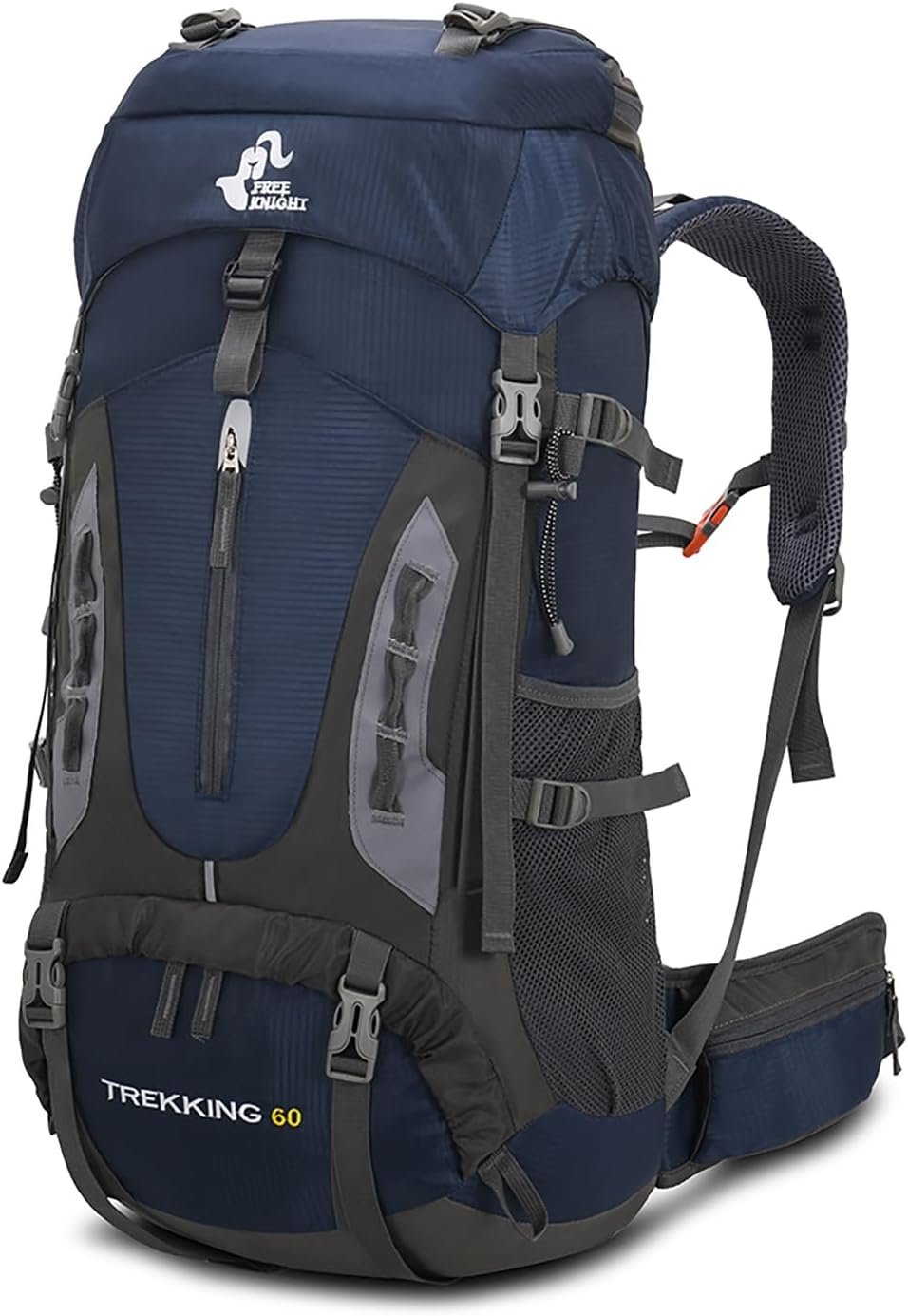
The Bseash 60L Hiking Camping Backpack with Rain Cover in Navy Blue is marketed for hiking, camping, climbing, touring, and outdoor travel. Its listed features include a large-capacity design and an accompanying rain cover. These characteristics make it relevant to people looking for a single backpack that can accommodate a range of outdoor activities.
Before choosing a backpack in this category, it is useful to understand what 60 liters means in practical terms, how a rain cover differs from waterproof backpack construction, and why fit and weight distribution matter on longer walks. It is also important to consider the limitations of a general-purpose outdoor pack, especially when carrying heavy equipment or traveling through demanding terrain.
This guide explores the main features associated with the Bseash 60L backpack, possible uses, packing considerations, and comparisons with other backpack categories. Product-specific details such as materials, dimensions, weight, compartment layout, and load limits should be confirmed through the current Amazon listing and manufacturer documentation.
Understanding the Bseash 60L Hiking Backpack
The Bseash backpack is designed for outdoor activities that may require more storage space than a conventional daypack. Its advertised 60-liter capacity indicates that the bag is intended to accommodate a substantial collection of personal belongings and outdoor equipment.
Capacity alone, however, does not determine how much a person can comfortably carry. Two backpacks with the same stated volume may differ in their internal shape, access points, compression straps, frame construction, and ability to distribute weight.
A well-packed 60-liter bag may be useful for a weekend camping trip, a multi-day hiking route, or travel that combines walking with overnight accommodation. Someone carrying a tent, sleeping bag, cooking equipment, extra clothing, and food may appreciate the additional room compared with a smaller daypack.
At the same time, a larger backpack can encourage unnecessary packing. Extra space is useful only when the contents are appropriate for the trip, and an overloaded pack may become uncomfortable regardless of its advertised capacity.
The navy blue finish provides a practical outdoor appearance that can suit different clothing and equipment styles. The included rain cover is another notable part of the product description, offering an additional layer intended to protect the backpack from rain when fitted correctly.
The best way to evaluate this type of pack is to consider how it will be used. A casual camper who carries equipment from a vehicle to a campsite may have different requirements from a hiker walking long distances over uneven terrain. Understanding those differences makes it easier to judge whether a general-purpose 60-liter backpack is appropriate.
Key Features of the Bseash 60L Backpack
1. Large 60-Liter Storage Capacity
The advertised 60-liter capacity is one of the backpack’s defining characteristics. It provides a useful reference point when comparing outdoor packs, although the usable space depends on the bag’s internal design and the shape of the items being packed.
A pack of this size may accommodate several categories of equipment, including:
- Spare clothing and weather-appropriate layers.
- Food and snacks for the planned journey.
- A water container or hydration equipment, if compatible.
- Personal hygiene supplies.
- A sleeping bag or compact sleeping equipment.
- Selected camping accessories.
- A first-aid kit and navigation essentials.
- Small electronics, chargers, and personal documents.
Not every item will fit easily in every 60-liter backpack. Bulky sleeping equipment, rigid cooking sets, or large tents can occupy considerable space even when their weight is manageable.
The layout of the bag also affects packing efficiency. Separate compartments can make it easier to organize smaller items, while a more open main compartment may be convenient for larger pieces of equipment.
Before choosing the Bseash model, review the current product photographs and specifications to understand its compartment arrangement, opening style, and any external attachment points.
It is also useful to pack according to the trip rather than the backpack’s maximum capacity. A shorter journey may require only part of the available space, and carrying less can make walking more comfortable.
2. Included Rain Cover
Outdoor activities often involve unpredictable weather. Even when a forecast looks favorable, hikers may encounter showers, damp vegetation, or sudden changes in conditions.
The Bseash product description identifies a rain cover as part of the package. A backpack rain cover is generally designed to fit over the outside of the bag, creating an additional barrier that helps reduce direct exposure to rain.
This can be useful when walking through light or moderate precipitation, particularly if the backpack contains clothing, food packaging, or other items that should remain dry.
However, a rain cover should not automatically be interpreted as a guarantee of complete waterproof protection. Water may still enter through exposed areas, seams, zippers, openings, or sections that are not covered properly. Wind can also move rain underneath an incorrectly fitted cover.
The actual level of protection depends on the cover’s construction, coverage, fit, and condition. Buyers should check the manufacturer’s description rather than assuming a particular waterproof rating.
For important items such as electronics, identity documents, medication, and spare clothing, individual waterproof bags can provide an additional layer of protection inside the backpack.
A rain cover is most useful when it is accessible before the weather changes. If the cover is buried beneath the contents, the user may have to unpack part of the bag while standing in the rain. Keeping it in an accessible location can make it easier to deploy when needed.
3. Design Intended for Outdoor Activities
The backpack is marketed for hiking, camping, climbing, touring, and travel. These activities share some equipment needs, but they do not all place the same demands on a backpack.
Hiking often requires comfortable weight distribution, easy access to water and snacks, and space for clothing layers. Camping may require additional capacity for sleeping equipment and cooking supplies. General travel may place greater emphasis on organizing clothing and personal belongings.
A versatile outdoor backpack may be useful when someone participates in several of these activities and prefers not to maintain a separate bag for every occasion.
Nevertheless, marketing language does not establish that a backpack is suitable for every level of outdoor activity. Technical climbing, winter mountaineering, and long-distance trekking may require specialized features such as dedicated gear attachment systems, a reinforced frame, specific load support, or equipment compatibility.
For climbing, the distinction is particularly important. A general-purpose backpack should not be used as a safety harness, belay attachment, or load-bearing climbing system unless it is explicitly designed and certified for that purpose.
Check the actual construction and intended use before taking the backpack into demanding terrain.
4. Navy Blue Color
The navy blue finish gives the backpack a relatively understated appearance that can suit outdoor clothing and travel equipment.
A dark blue bag may be practical for everyday use because it does not immediately show every minor mark in the same way some lighter fabrics might. Actual stain visibility depends on the material, finish, and type of dirt involved.
Color can also help identify personal equipment when several people carry similar bags. However, navy blue is a common luggage color, so it should not be treated as a unique identifier.
Travelers can use a luggage tag or another suitable marker to distinguish the backpack when needed. Identification details should be displayed thoughtfully, particularly when traveling through busy public spaces.
Color is ultimately a personal preference. It does not determine carrying comfort, weather protection, durability, or load capacity.
5. Potential for Multi-Day Packing
A 60-liter backpack may provide enough space for equipment needed during a short multi-day trip, depending on the season, the user’s packing habits, and the type of accommodation.
A summer camping trip with lightweight equipment can require much less space than a cold-weather journey involving bulky insulation and additional protective layers.
The backpack’s practical capacity also depends on how its storage areas are arranged. A bag may have a large main compartment but limited access to smaller essentials. Another design may distribute storage across multiple sections.
When assessing the Bseash backpack, check whether its dimensions and compartment layout suit the equipment you already own.
It is also important to consider the combined weight of everything packed inside. A large bag can hold substantial equipment, but carrying more weight increases physical effort and may make the trip less enjoyable.
Capacity should be treated as available space, not as a recommendation to fill the backpack completely.
6. External Organization and Attachment Options
Many hiking backpacks include external pockets, compression straps, or attachment points to help organize equipment. These features can be useful when a traveler wants to keep frequently used items accessible or secure bulky gear outside the main compartment.
The exact arrangement of the Bseash backpack should be verified from the current product listing. Do not assume that a particular pocket, hydration sleeve, or equipment attachment is present unless the specifications confirm it.
When external attachment points are available, use them according to the manufacturer’s instructions. Avoid hanging heavy or unstable objects where they can swing while walking.
External items can also catch on branches, doors, and other obstacles. Keep the load compact when moving through narrow trails or crowded areas.
A good organization system balances accessibility with stability. Items needed frequently should be easy to reach, while heavier equipment should be positioned to support balanced carrying.
7. Adjustable Fit and Carrying Comfort
Fit is a central consideration for any hiking backpack. A bag can have ample capacity and useful storage features yet still feel uncomfortable if it does not fit the user’s torso or distributes weight poorly.
Backpack comfort depends on several factors, including shoulder strap shape, strap adjustment, padding, back-panel construction, and the placement of heavier items.
If the Bseash model includes adjustable shoulder straps or other fitting components, use the manufacturer’s guidance to configure them correctly. The available adjustment range should be checked against the user’s body size.
For a loaded pack, the shoulder straps should sit comfortably without excessive pressure, and the bag should remain stable while walking. The user should not need to lean significantly forward or repeatedly readjust the straps to maintain balance.
Do not assume that all hiking backpacks include a structured hip belt or a load-supporting frame. These features vary by model, and their presence and design should be confirmed before purchase.
When planning longer hikes, consider trying the backpack with a representative load before relying on it for a demanding route.
How the Bseash 60L Backpack Can Be Used
Weekend Camping Trips
A weekend camping trip may involve carrying clothing, food, personal supplies, and sleeping equipment. A 60-liter backpack can provide useful space for these items when the pack’s dimensions and organization match the equipment being carried.
For a campsite that requires a walk from a parking area, the backpack may help consolidate belongings into one bag. This can reduce the number of loose items that need to be carried separately.
A practical packing plan starts with the essentials: suitable clothing, a sleeping system, food, water, navigation equipment, and weather protection. Add optional items only after the necessary equipment has been accounted for.
If the campsite is accessible by vehicle, a larger bag may be convenient because the weight does not need to be carried over a long distance. If the trip involves several hours of walking, a lighter and more carefully selected load becomes more important.
The included rain cover may be useful if showers are possible, but sensitive items should still be protected individually.
Multi-Day Hiking
For a multi-day hiking route, the backpack needs to carry everything required between resupply points or overnight stops.
Depending on the route, this may include extra socks, insulation, rainwear, food, a water treatment method, navigation tools, a first-aid kit, and camping equipment.
A 60-liter capacity can accommodate a range of setups, but it does not automatically make the backpack suitable for every long-distance trail. Fit, total weight, load support, and the availability of water or resupply locations all influence the appropriate pack size.
Before leaving, test the packed backpack on a shorter walk. Check whether the shoulder straps remain comfortable, whether the load moves while walking, and whether essential items can be accessed without unpacking everything.
For remote routes, avoid depending on an untested backpack or an unfamiliar packing arrangement. Equipment should be checked in advance, and the trip plan should account for weather, terrain, and the user’s experience.
Day Hikes With Additional Equipment
Although a 60-liter backpack is larger than many typical daypacks, some users may want extra room for specialized equipment, camera gear, extra layers, or group supplies.
For example, a person leading a group walk might carry additional food, spare clothing, or emergency equipment. A photographer may need space for protective cases and accessories, depending on the camera system.
However, carrying a large backpack on a short day hike can encourage unnecessary packing. The extra volume may also make the bag feel bulky on narrow trails.
If most outings last only a few hours, a smaller daypack may be more convenient. The Bseash backpack may be more appropriate when the activity genuinely requires additional storage.
General Travel and Touring
A large outdoor backpack can also be used for trips that combine different types of transportation and accommodation.
For example, a traveler moving between hostels, guesthouses, campsites, and public transportation may want a single bag for clothing and personal belongings. The rain cover can be useful when walking between locations in wet weather.
However, a 60-liter pack may be larger than necessary for some forms of urban travel. Its size can affect comfort in crowded buses, trains, and stations, and it may not fit easily into every overhead compartment or luggage locker.
Check the dimensions of the fully packed backpack against the rules of the airline or transportation provider. Do not assume that a hiking backpack qualifies as carry-on luggage because it is carried on the user’s back.
For travel involving valuable electronics or fragile items, use suitable protective cases and place them where they will not be compressed by heavier contents.
Outdoor Activities in Changeable Weather
Weather can change quickly in mountainous or exposed areas. A backpack rain cover can help reduce the amount of rain reaching the bag when used correctly.
Before leaving, check the forecast and pack waterproof clothing separately from dry layers. Keep the rain cover accessible and practise fitting it before the trip.
If the route includes prolonged rainfall, stream crossings, or conditions where the backpack may be submerged, a rain cover alone may not provide adequate protection. Waterproof liners or dry bags may be more appropriate for essential equipment.
Wet weather also affects footing, visibility, and temperature management. A backpack is only one part of the preparation needed for a safe outdoor outing.
Carrying Equipment to a Campsite
Some camping trips involve a relatively short walk from a parking area or trailhead to the campsite. In this situation, a larger backpack may provide a convenient way to move clothing, food, and sleeping equipment in one trip.
The required carrying comfort may differ from that of a long-distance hike, but the pack should still be balanced and fitted correctly.
Avoid placing heavy objects loosely at the top or outside of the bag, where they can shift during movement. Secure external equipment and keep the load compact.
If the bag is particularly heavy, consider splitting the equipment between multiple people or making more than one trip rather than carrying an unnecessarily large load.
Who May Find This Backpack Suitable?
Weekend Campers
People who regularly spend one or two nights outdoors may appreciate the storage space offered by a 60-liter pack.
It may accommodate clothing, food, sleeping equipment, and other personal supplies, depending on the size of the gear. The included rain cover may also be useful for trips where showers are possible.
Weekend campers should check the backpack’s dimensions and support features to make sure it suits their equipment and the distance they expect to walk.
Casual Hikers
Casual hikers who take occasional overnight trips may be interested in a versatile backpack that can handle different outdoor plans.
The large capacity may be useful when a trip involves extra clothing or camping equipment. However, someone who mainly walks established trails for a few hours may not need this much space.
A smaller daypack can be easier to manage for short outings, while a larger bag becomes more relevant when the activity requires more equipment.
Budget-Conscious Outdoor Travelers
Some travelers prefer to use one backpack for several types of trips rather than maintaining separate bags for camping, hiking, and general travel.
A multi-purpose design can be convenient if it matches the user’s activities. However, versatility should not be confused with suitability for every task.
Before deciding, compare the verified specifications with the features needed for the most demanding activity the backpack will support. A general-purpose pack may be suitable for ordinary hiking and camping but not for specialized climbing or heavy expedition loads.
Travelers Who Need Weather Protection
The included rain cover may appeal to people who expect occasional rain while walking or carrying luggage outdoors.
It can provide an additional barrier against wet weather, especially when fitted correctly. However, people who regularly travel in prolonged rain should investigate the cover’s actual protection level and consider supplementary waterproof storage for essential belongings.
The need for more comprehensive protection depends on the climate, route, duration, and consequences of equipment getting wet.
Travelers Carrying Clothing and Personal Belongings
A 60-liter backpack may be useful for travelers who prefer a soft-sided bag with substantial storage capacity.
It can provide room for clothing, toiletries, and personal items, particularly when the trip involves moving between locations without a conventional suitcase.
Nevertheless, the backpack’s size and dimensions may be less convenient in crowded transport or small accommodation spaces. Travelers should consider the full journey rather than focusing only on storage capacity.
Important Things to Consider Before Choosing the Bseash Backpack
Check the Actual Dimensions and Weight
The advertised 60-liter capacity does not reveal the backpack’s external dimensions or its empty weight.
These details matter because a large bag can become cumbersome when fully loaded. External dimensions also influence how easily it can be stored in a vehicle, carried through a station, or placed in a luggage compartment.
Check the product listing for height, width, depth, and empty weight. Compare these measurements with the space available at home and the transportation rules relevant to the trip.
If possible, estimate the total packed weight before deciding whether the backpack is appropriate for the planned distance.
Confirm the Fit and Support System
Backpack fit affects comfort and stability, particularly when carrying heavy equipment over uneven ground.
Review the product specifications for shoulder strap adjustment, back-panel design, padding, and any hip belt or frame components. The presence of these features should not be assumed from the capacity alone.
If you plan to carry the backpack for several hours at a time, try it with a representative load before a major trip. Adjust the straps carefully and check for uncomfortable pressure points.
If the pack consistently causes pain, restricts movement, or feels unstable, it may not be a suitable fit for the user or load.
Understand the Rain Cover’s Limitations
A rain cover can reduce direct exposure to rain, but it does not necessarily make the entire backpack waterproof.
Water may enter through uncovered sections, openings, seams, or areas where the cover does not fit closely. Wind and movement can also affect how well it remains in place.
Check whether the manufacturer specifies a water-resistance rating or particular weather conditions. If the documentation does not establish a rating, avoid describing the backpack as completely waterproof.
For critical items, use individual dry bags or waterproof pouches. This is especially important for electronics, spare clothing, documents, and other belongings that would be difficult to replace.
Consider the Intended Terrain
A backpack designed for general hiking and camping may not offer all the features needed for technical mountaineering or climbing.
Specialized activities may require equipment-specific attachment points, reinforced construction, a particular profile, or compatibility with protective gear.
Do not use a general-purpose backpack as part of a climbing safety system unless it is explicitly designed and rated for that use. If your plans involve technical routes, consult the equipment requirements for the activity and select a pack designed for that environment.
Plan the Load Carefully
A large backpack can hold many items, but weight is often more important than volume.
Heavy equipment increases the effort required to walk uphill and may affect balance on uneven ground. A poorly arranged load can also create uncomfortable pressure on the shoulders and back.
Pack heavier items close to the body and keep the load balanced from side to side. Place frequently used items where they can be accessed without emptying the main compartment.
Avoid carrying equipment simply because there is space available. Before departure, remove duplicate items and reconsider whether each object is necessary.
Check Pocket Layout and Access
Storage organization can have a major effect on daily use.
Some backpack designs emphasize one large main compartment, while others provide several separate sections or external pockets. The right arrangement depends on how the user packs and which items need to remain accessible.
Review the current product photographs and specifications to understand the Bseash model’s layout. Confirm whether it has the specific features you need, such as a separate compartment for small essentials or external attachment points.
Do not assume that a backpack includes a hydration sleeve, laptop compartment, or particular pocket configuration unless the listing confirms it.
Consider Ventilation and Comfort in Warm Weather
Walking with a loaded backpack can increase body heat, particularly during summer hikes or in humid environments.
The way a pack sits against the back can influence comfort, but ventilation features vary between models. Check the product information for details about the back panel and padding.
Wear appropriate clothing and take breaks when necessary. A backpack cannot eliminate the effects of heat, humidity, or strenuous activity.
Inspect Materials and Construction
Fabric quality, stitching, zippers, buckles, and adjustment points all influence how a backpack performs over time.
The exact materials used in the Bseash model should be confirmed from the listing. Avoid assuming a particular fabric type, waterproof rating, or load limit unless it is explicitly documented.
Before each trip, inspect the backpack for loose stitching, damaged zippers, torn fabric, or worn adjustment components. If a critical part is damaged, repair or replace the bag before relying on it in a remote location.
Review Airline and Transportation Restrictions
A 60-liter backpack may be larger than the carry-on limits imposed by some airlines. Capacity does not determine whether a bag can be taken into the cabin.
Check the transportation provider’s current dimensions and weight rules, including any restrictions on external accessories. If the backpack must be checked, consider protecting straps and loose attachments according to the carrier’s guidance.
For train, bus, or shared transport, consider whether the bag will fit in the available luggage space and remain manageable in crowded conditions.
Read the Current Product Information
Specifications and product descriptions can change over time. Before choosing the Bseash backpack, confirm the exact model, color, included rain cover, dimensions, weight, materials, storage layout, and any stated load recommendations.
Customer feedback, where available, can provide additional context about fit and practical use, but individual experiences do not guarantee the same outcome for every user.
The most useful decision comes from matching verified product details with the demands of your planned activities.
Comparing General Backpack Categories
Different backpack categories are designed around different priorities. Comparing them can help determine whether a 60-liter outdoor pack is appropriate for a particular trip.
Large Hiking and Camping Backpacks
Large hiking backpacks provide space for clothing, food, sleeping equipment, and other supplies needed for overnight or multi-day outings.
Their usefulness depends on fit, organization, and the user’s ability to carry the resulting load. Some models include structured frames and load-supporting hip belts, while others use simpler construction.
A 60-liter pack such as the Bseash model may suit travelers who need substantial storage for general outdoor activities, provided its actual support features meet their needs.
Compact Daypacks
Daypacks are designed for shorter outings and usually offer less storage than multi-day backpacks.
Their smaller size can make them easier to manage on short walks, city visits, and activities that require only water, snacks, a jacket, and a few essentials.
The trade-off is limited capacity for camping equipment and multiple changes of clothing. Someone planning regular overnight trips may need more space than a compact daypack provides.
Technical Climbing Backpacks
Technical climbing backpacks are designed around the specific demands of climbing and mountaineering.
Depending on the model, they may include specialized attachment points, reinforced areas, a streamlined shape, and compatibility with climbing equipment.
A general hiking backpack should not automatically be treated as equivalent to a technical climbing pack. Users planning demanding routes should verify that the chosen bag is appropriate for the activity and does not interfere with safety equipment.
Travel Backpacks
Travel backpacks often emphasize access to clothing and personal belongings, organization, and compatibility with different transportation environments.
Some have large openings that make packing similar to a suitcase easier, while others follow a more traditional top-loading hiking design.
The most appropriate style depends on whether the journey involves long walks, frequent hotel changes, flights, or mostly vehicle-based transportation.
A 60-liter hiking backpack may be versatile for travel, but its size and shape should be compared with the user’s itinerary and transport restrictions.
Waterproof Backpacks and Dry Bags
Waterproof backpacks and dry bags are designed to provide a different level of water protection from a conventional backpack with a rain cover.
Their performance depends on construction, closures, seams, and the manufacturer’s stated rating. Some products are intended for heavy rain, while others may be designed for more demanding water exposure.
A rain cover can be useful for ordinary wet weather, but it should not be assumed to provide the same protection as a fully waterproof bag.
For trips where water exposure is a serious concern, compare the stated protection level of each option and use additional dry storage for critical equipment.
Frequently Asked Questions
Is the Bseash 60L backpack suitable for camping?
It may be suitable for camping trips that require substantial storage for clothing, food, and selected equipment. The actual suitability depends on the backpack’s dimensions, support system, and the size and weight of the gear being carried.
Check the current product specifications before deciding whether it fits your camping setup.
What does a 60-liter capacity mean?
A 60-liter capacity indicates the approximate volume available for storing equipment. It does not establish how much weight the backpack can safely or comfortably carry.
The usable space depends on the bag’s design and the shape of the items being packed. Total weight, fit, and load distribution are equally important.
Does the included rain cover make the backpack completely waterproof?
Not necessarily. A rain cover is intended to provide an additional barrier against rain, but its protection depends on coverage, fit, construction, and weather conditions.
Water may still enter through openings or uncovered areas. Use waterproof bags for essential belongings when appropriate.
Can the backpack be used for hiking?
The product is marketed for hiking and outdoor activities. Whether it suits a particular hike depends on the terrain, distance, load, and the backpack’s verified fit and support features.
For long or demanding routes, test the pack with a representative load before departure.
Is the backpack appropriate for technical climbing?
Do not assume that a general-purpose hiking backpack is suitable for technical climbing. Climbing activities may require specialized equipment and attachment systems.
Verify the manufacturer’s intended use and choose equipment appropriate for the specific route. Never rely on an ordinary backpack as a climbing safety device unless it is explicitly designed and rated for that purpose.
Can the backpack be used for air travel?
It may be used as checked luggage or, if it meets the relevant restrictions, as cabin baggage. The 60-liter capacity alone does not establish carry-on eligibility.
Measure the packed bag and check the current size and weight limits of the airline or transportation provider.
What should be packed in a 60-liter hiking backpack?
Depending on the trip, a packing list may include clothing layers, food, water, navigation tools, a first-aid kit, rainwear, personal supplies, and camping equipment.
The appropriate contents depend on the duration, weather, terrain, and availability of resupply points. Avoid filling the bag simply because space is available.
How can the backpack be packed comfortably?
Place heavier items close to the body and keep the load balanced from side to side. Keep frequently used items accessible and secure equipment so that it does not shift while walking.
Adjust the shoulder straps according to the manufacturer’s guidance and test the loaded backpack before a long trip.
Is navy blue a practical color for outdoor use?
Navy blue offers a neutral appearance that can suit outdoor clothing and equipment. It may show certain marks differently from lighter colors, depending on the material.
Color does not determine durability or weather protection. If easy identification is important, consider adding a suitable luggage tag or another visible marker.
How should the rain cover be stored?
Follow the manufacturer’s care and storage instructions. In general, allow a wet cover to dry before storing it for an extended period, and keep it in an accessible location before and during outdoor trips.
Inspect the cover periodically for tears or damage that could affect its ability to protect the backpack.
What should buyers verify before choosing the Bseash backpack?
Check the dimensions, empty weight, materials, compartment arrangement, adjustment features, rain cover details, and any stated load recommendations.
Compare these specifications with the requirements of your planned activities. The current Amazon listing should be used to confirm product-specific information.
Conclusion
The Bseash 60L Hiking Camping Backpack with Rain Cover in Navy Blue is marketed as a general-purpose outdoor bag for hiking, camping, climbing, touring, and travel. Its advertised capacity provides a useful reference for people who need more room than a compact daypack offers, while the included rain cover adds a practical option for managing ordinary wet weather.
A backpack of this size may be useful for weekend camping, selected multi-day hikes, and travel that involves carrying clothing and personal equipment between locations. Its usefulness depends on the actual storage layout, fit, support features, construction, and the weight of the packed contents.
Before choosing the Bseash model, confirm the current product specifications and make sure the backpack suits the most demanding activity you plan to undertake. Check the dimensions, empty weight, adjustment options, rain cover design, and any stated load guidance. Pack carefully, test the fit before a long journey, and use additional waterproof storage when essential items need more protection.
It is also important to distinguish general outdoor use from technical climbing or other demanding activities. A versatile hiking backpack is not automatically suitable for specialized safety equipment or every mountain environment.
For travelers who need substantial storage for outdoor equipment and want an included rain cover, the Bseash 60L backpack may be worth considering if its verified specifications match their requirements.
You can check more details on Amazon here
As an Amazon Associate, we earn from qualifying purchases.